

Decking Refinishing: A Step-by-Step Guide
Timber decking can take a lot of punishment from the British weather. Rain, shade, algae, foot traffic and years of exposure can leave boards looking grey, tired and uneven, while old paints, stains and coatings can begin to peel or wear away.
When decking reaches this stage, simply pressure washing it isn't always enough.
Proper decking refinishing is about taking the timber back to a sound, clean and properly prepared surface before applying a suitable new finish. Depending on the condition of the deck, that can involve cleaning, repairs, removing failed coatings, sanding and allowing the timber to dry thoroughly before any new treatment is applied.
In this guide, we'll take you through the main stages involved in refinishing timber decking and explain why preparation is often the most important part of the job.
Start With the Condition of the Deck
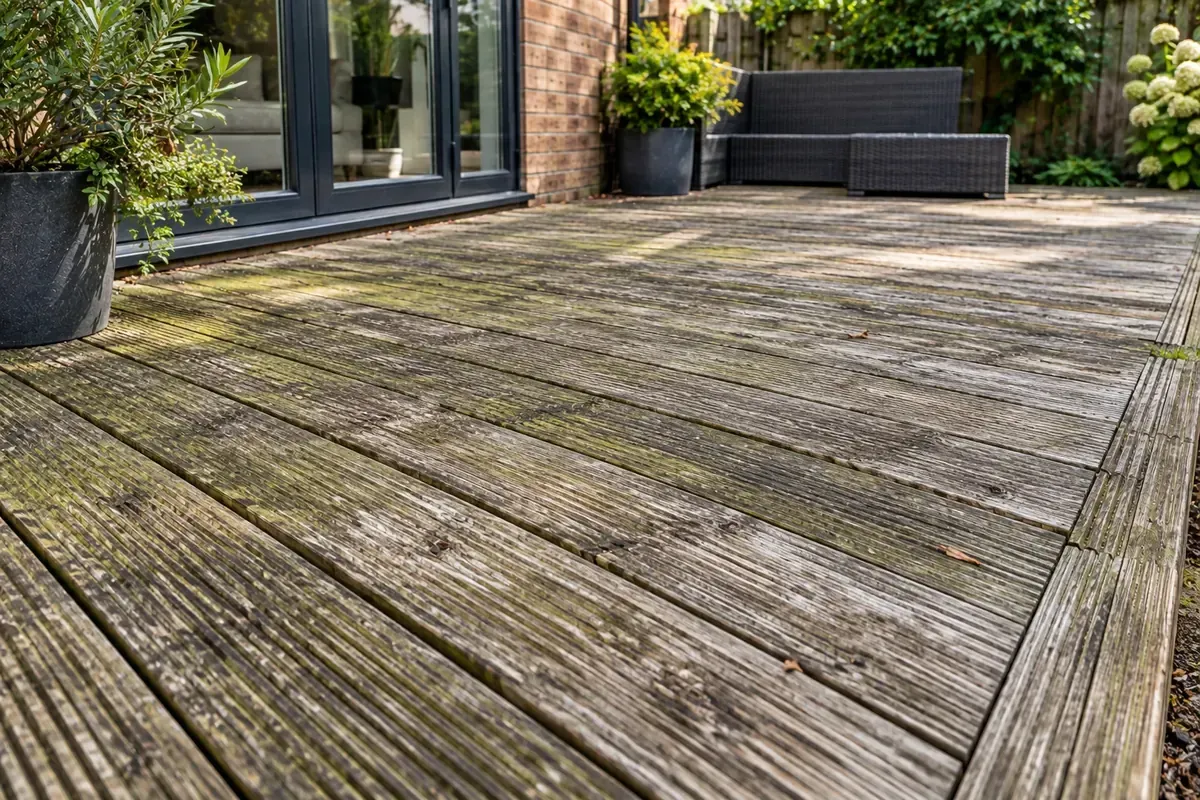
Before reaching for a pressure washer, sander or tin of decking oil, the first step is to understand what you're working with.
Check the decking for loose or damaged boards, raised fixings, splits, movement and areas where the timber may have deteriorated. Pay particular attention to steps, edges and places that remain damp or receive very little sunlight.
The existing finish also matters. A deck previously treated with oil can require very different preparation from one covered with decking paint or a film-forming coating.
This initial inspection helps determine whether the deck simply needs cleaning and recoating or whether more extensive restoration work is required.
Carry Out Any Necessary Repairs
There's little point creating a beautiful finish on decking that isn't structurally sound.
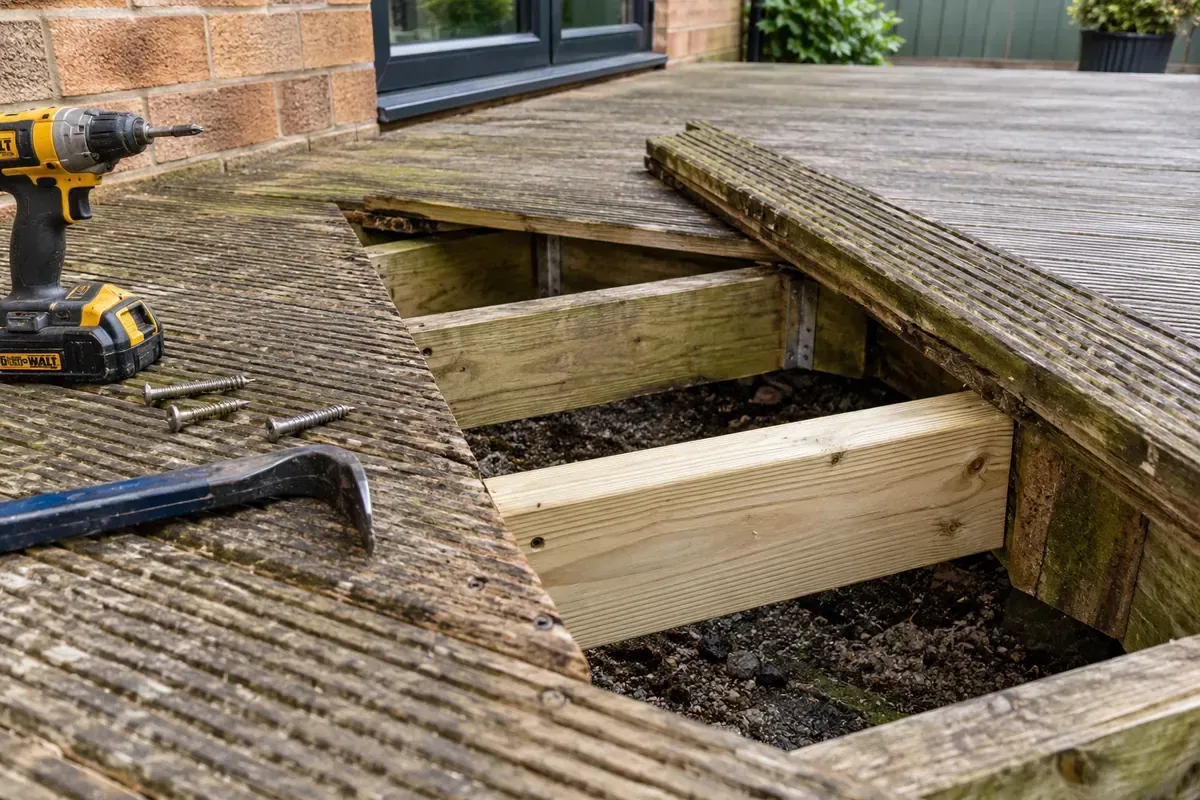
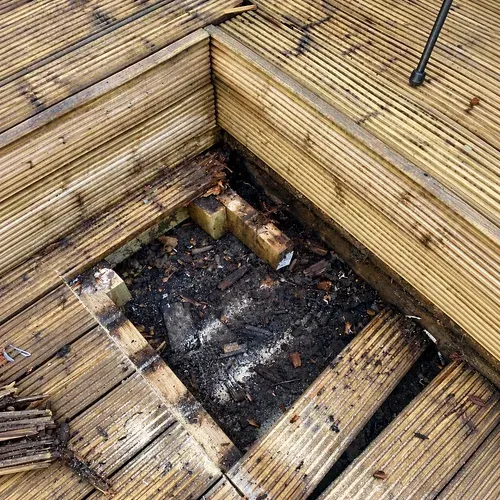
Loose boards and fixings should be dealt with before refinishing begins, and damaged sections may need repairing or replacing. In some cases, additional support may also be required beneath the deck where movement has developed over time.
Taking care of these problems at the beginning means the finished deck doesn't just look better — it provides a sounder surface to work from.
Clean the Timber Decking
Once repairs have been dealt with, accumulated dirt, algae and other organic growth need to be removed.
Pressure washing can be an effective part of this process, but timber needs considerably more care than concrete or block paving.
Excessive pressure, working too close to the surface or using poor technique can damage the fibres and leave visible marks in the boards.
The aim isn't simply to use as much pressure as possible. It's to clean the timber effectively while protecting the surface we're trying to restore.
Depending on its condition, additional cleaning or treatment may also be required before moving on to the preparation stages.
Deal With Old or Failed Finishes
One of the biggest differences between decking cleaning and decking refinishing is dealing with what's already on the timber.
Old decking paint, stain and other coatings can peel, flake or wear unevenly. Applying a fresh finish directly over a failing coating may improve its appearance temporarily, but the new finish is only as sound as the surface underneath it.
Loose and deteriorated material therefore needs to be removed as part of the preparation process.
How much work is required will depend on the existing coating and its condition. Some decks may only need relatively light preparation, while badly failed finishes can require considerably more work before the timber is ready for refinishing.
Sand and Prepare the Surface
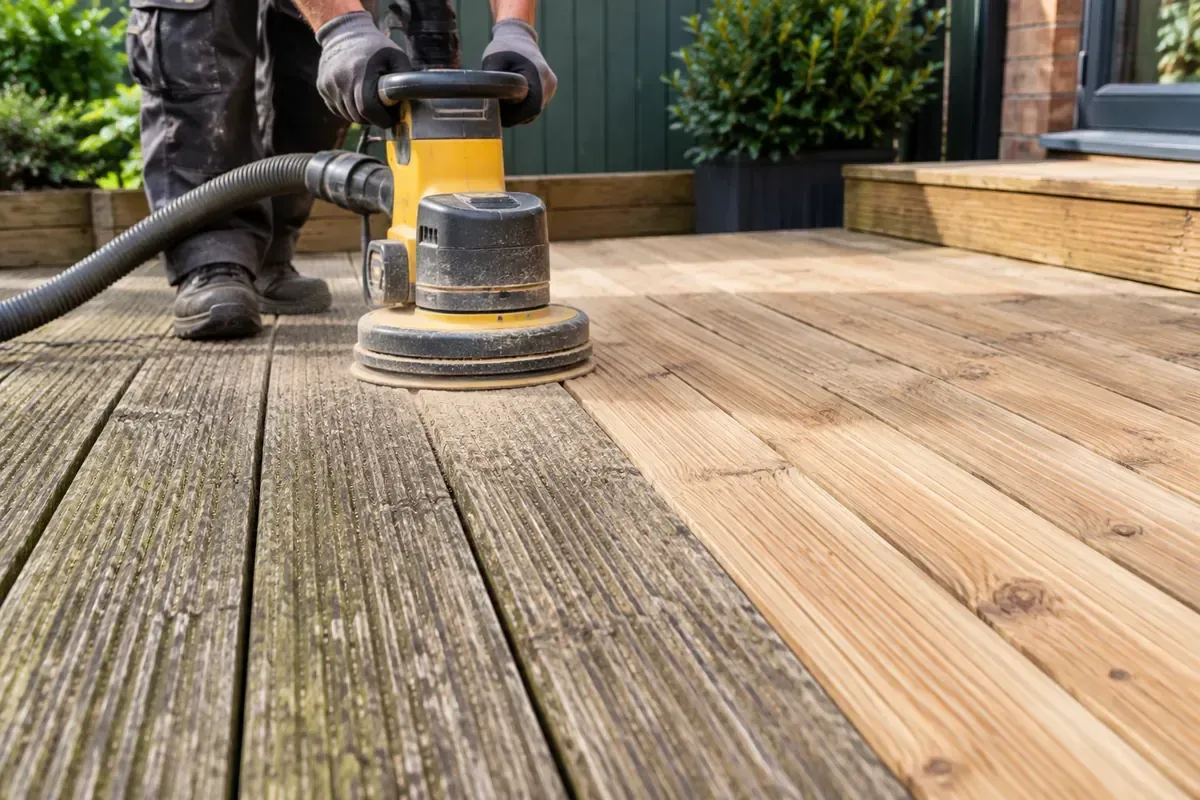
Sanding helps remove remaining imperfections, smooth raised timber fibres and prepare the boards for their new finish.
Particular attention should be paid to areas where previous coatings have been removed and where weathering has left the timber uneven.
The objective isn't necessarily to make every board look brand new. Timber naturally develops variation as it ages. The important thing is to create a clean, stable and properly prepared surface capable of accepting the chosen finish.
Let the Deck Dry Properly
Patience matters at this stage.
After cleaning, the timber needs sufficient time to dry before a new finish is applied. How long that takes depends on the weather, temperature, airflow, shade and the condition of the decking itself.
Decks surrounded by trees or positioned in shaded parts of a garden can remain damp considerably longer than exposed areas.
Applying a finish before the timber is ready can affect how well the product penetrates, adheres and ultimately performs, so drying shouldn't be rushed simply to get the job finished.
Choose a Suitable Decking Finish
Once the preparation is complete, it's time to choose the finish.
Decking paints, stains and oils behave differently, and the right option depends on the timber, its previous treatment and the appearance you're trying to achieve.
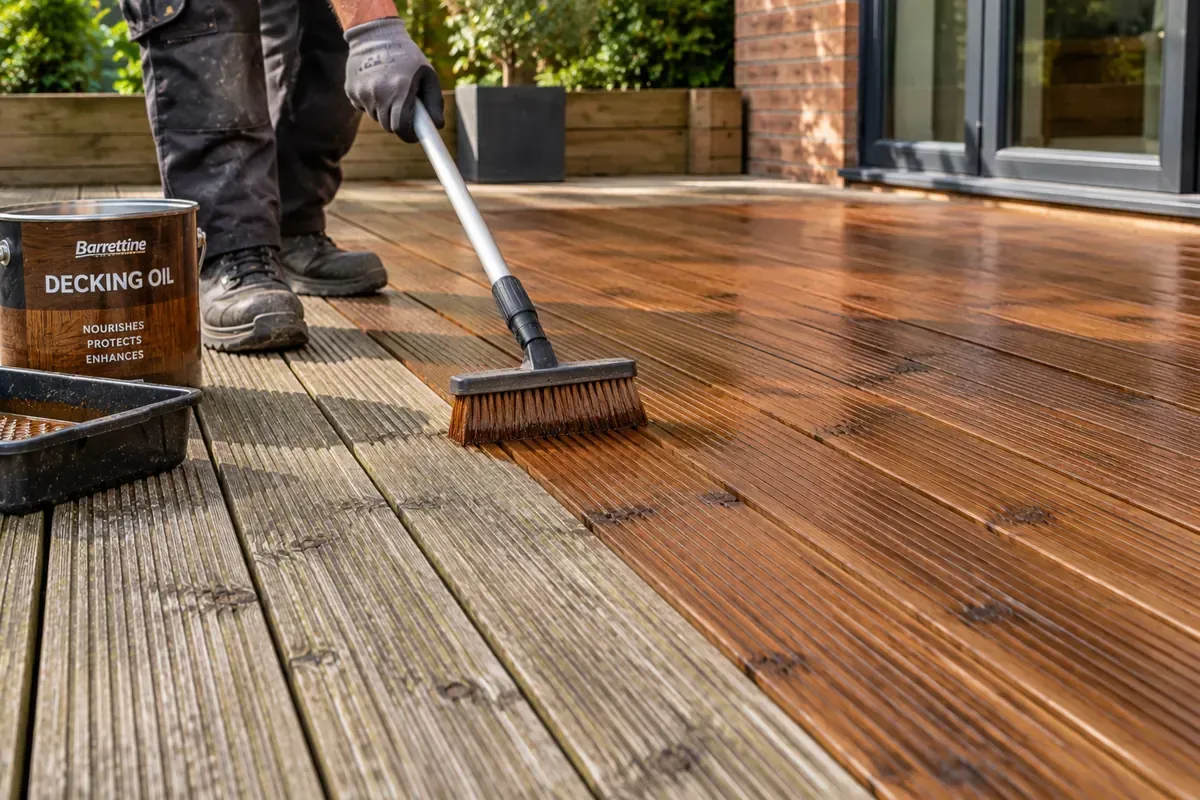
For suitable timber decking, a quality decking oil can enhance the natural appearance of the wood while providing protection from weathering and moisture. Oils are available in natural and coloured finishes, allowing the character of the timber to remain visible rather than completely covering it.
Whatever product is chosen, it should be suitable for exterior decking and applied in accordance with the manufacturer's instructions.
Apply the Finish Properly
Good preparation can easily be undone by poor application.
The finish should be applied methodically, maintaining a consistent coverage and avoiding excessive build-up.
Where appropriate, we use controlled spray application followed by back-brushing. The brush helps work the product into the timber, even out the finish and deal with areas where excess material may otherwise collect.
Edges, board ends, steps and awkward areas also need attention rather than concentrating solely on the large, easy-to-reach sections of decking.
Apply Additional Coats and Allow the Finish to Cure
Some decking finishes require more than one coat.
Rather than relying on a universal drying time, follow the product manufacturer's instructions and take the prevailing weather conditions into account.
Once the final coat has been applied, the finish should be given adequate time to cure before furniture is returned or the deck is subjected to regular foot traffic.
Rushing the final stage after spending so much time preparing the timber can compromise an otherwise successful restoration.
A Decking Restoration in Beverley
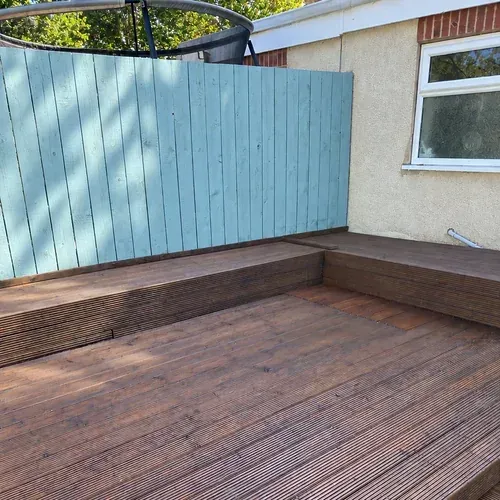
This decking at a property in Beverley had previously been finished with decking paint, but the coating hadn't lasted through the winter.
Two large trees close to the property kept much of the decking shaded and damp, creating difficult conditions for the timber and its previous finish.
Before refinishing could begin, we carried out a number of repairs to reinforce the base and properly prepared the existing surface. Once the timber was ready, two coats of rosewood decking oil were applied to restore and protect the deck while retaining the natural appearance of the timber.
While we were there, the customer also asked us to repaint the surrounding fencing, changing it from cedar red to a calmer sage green.
It's a good example of why successful decking refinishing starts long before the first coat of oil is applied.
Cleaning or Refinishing?
Not every tired-looking deck needs complete restoration.
If the timber is fundamentally sound and is mainly affected by dirt, algae and surface weathering, professional decking cleaning may be all that's required.
Where the previous finish is peeling or failing, the timber has become heavily weathered, repairs are required or you want to change the existing finish, a more comprehensive decking restoration and refinishing process may be appropriate.
The important thing is choosing the work based on the condition of the decking rather than automatically applying another coating.
Maintaining Your Refinished Deck
Once restored, a little regular maintenance can help keep decking looking good for longer.
Keep leaves and debris from accumulating, particularly during autumn and winter, and deal with algae or organic growth before it becomes heavily established. Areas beneath furniture and planters are also worth checking because they can remain damp for extended periods.
Most importantly, don't necessarily wait until the finish has completely failed before doing anything. Periodic cleaning and maintenance coats can be considerably easier than allowing the decking to deteriorate to the point where another full restoration is required.
Frequently Asked Questions
What is the difference between decking cleaning and decking refinishing?
Decking cleaning primarily removes dirt, algae and organic growth from the surface. Decking refinishing goes further and can involve repairs, removing failed coatings, sanding and preparing the timber before applying a new protective finish.
Can you refinish decking that has previously been painted?
Yes, in many cases. The existing paint needs to be assessed first, particularly if it is peeling, flaking or separating from the timber. Failed coatings may need to be removed before a new finish can be applied successfully.
Do you have to sand decking before applying decking oil?
Can you pressure wash decking before refinishing it?
Yes, pressure washing can be used to clean timber decking, but it needs to be done carefully. Excessive pressure or poor technique can damage the surface of the timber. The aim is effective cleaning rather than simply using the highest pressure available.
How long should decking dry before it is refinished?
There isn't one drying time that suits every deck. Weather, temperature, airflow, shade and the condition of the timber all affect how quickly it dries. The timber needs to be sufficiently dry for the chosen product, and the manufacturer's application instructions should always be followed.
Is decking oil better than decking paint?
They produce different types of finish. Decking paint generally provides a more opaque coating, while decking oils can enhance the appearance of the timber while allowing more of its natural character to remain visible. The most suitable option depends on the timber, its previous treatment and the finish you're trying to achieve.
Can damaged decking be repaired before refinishing?
Minor repairs can often be completed as part of the restoration process. Loose boards, fixings and areas requiring reinforcement should ideally be dealt with before the final preparation and refinishing stages begin. Timber that is badly rotten or structurally unsound may need replacing.
How often does refinished decking need maintenance?
There's no fixed interval because exposure, foot traffic, surrounding vegetation, shade and the product used all affect how quickly a finish weathers. Regular cleaning and inspecting the timber can help identify when a maintenance coat is required before the existing finish deteriorates significantly.
Does Your Deck Need More Than a Clean?
If your timber decking is weathered, damaged or covered by a failing previous finish, we can assess its condition and explain the options available.
Hedon Exterior Cleaning provides decking cleaning, restoration and refinishing across Hull and East Yorkshire, including Hedon, Beverley and surrounding towns and villages.
Request a Free Quote
Tell us:
- What you'd like cleaned — driveway, patio, paving, decking or other exterior surface
- Approximate size — measurements are helpful if you have them
- Current condition — let us know about moss, algae, black spots, staining or other problems
- Access — anything we should know about getting equipment to the area
- Your postcode — so we know where the property is
📞 Call us: 01482 898 742
📧 Request a quote online: Complete the form below
🌍 Local service: Hull & East Yorkshire
Get in touch
Our Promise to You
We believe exterior cleaning should be straightforward: turn up when we say we will, do the job properly and charge a fair price.
Need Exterior Cleaning Help?
We offer a full range of exterior cleaning, restoration and maintenance services across Hull & East Yorkshire
Call 01482 898 742
Or request a quote online
Serving Hull & East Yorkshire and the local area
Popular Articles

Visit The Knowledge Bank >
Need Help With Your Exterior Cleaning
We offer a wide range of professional exterior cleaning services for homes and properties across Hull & East Yorkshire. From driveways, patios and decking to gutters, render and other exterior surfaces, if something outside your property needs cleaning, restoring or maintaining, there’s a good chance we can help.
Not sure which service you need? Just tell us what you'd like help with and we'll point you in the right direction.