
Historic Gutter Cleaning at Halsham House, East Yorkshire – A Case Study
Protecting a centuries-old property through careful gutter clearing, vegetation management and preventative maintenance.
Caring for a Historic East Yorkshire Property
Every property presents its own maintenance challenges, but historic buildings often require a particularly thoughtful approach.
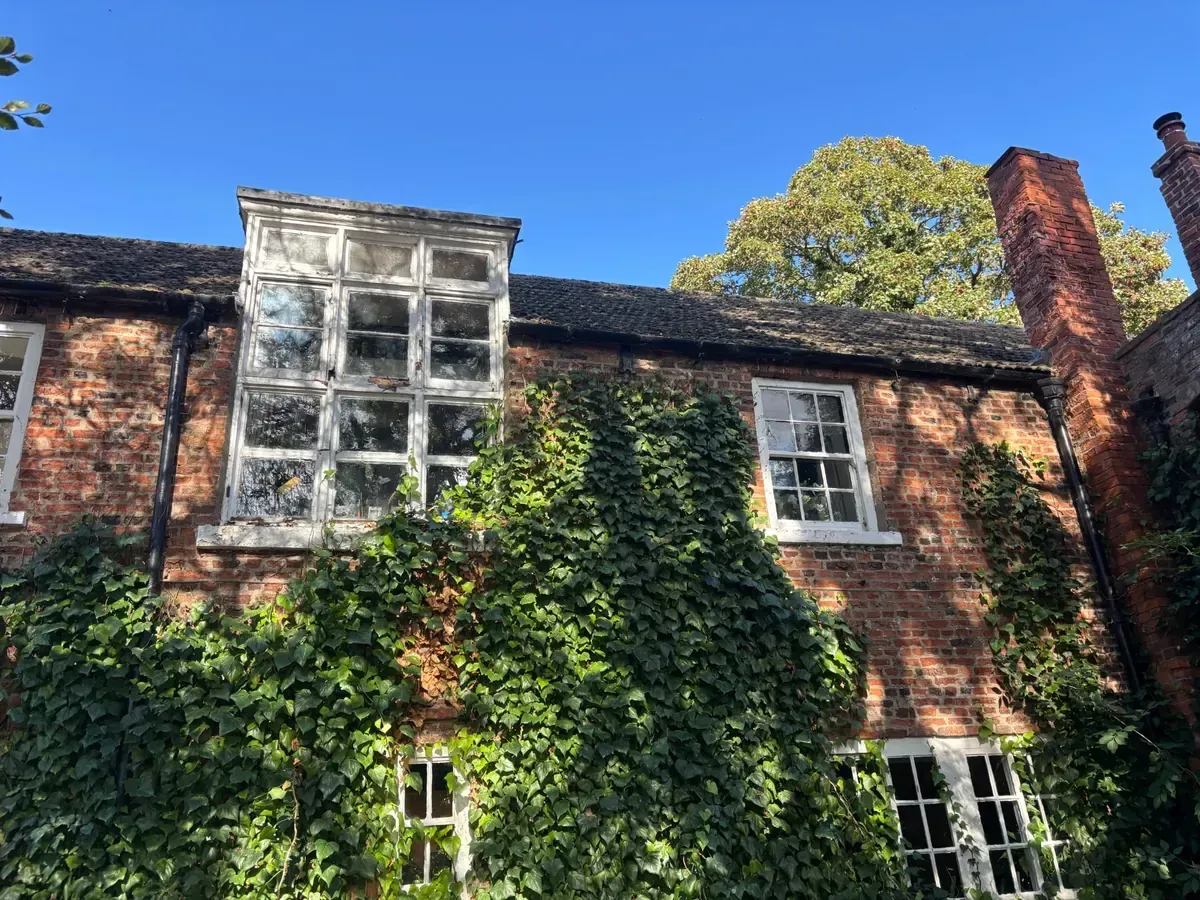
Hedon Exterior Cleaning recently carried out comprehensive gutter and rainwater drainage maintenance at Halsham House, a Grade II listed property in the East Riding of Yorkshire, dating back to the late 16th century.
Today, the building is used as holiday accommodation, welcoming guests to enjoy its historic character and attractive rural surroundings.
However, the mature trees and established vegetation surrounding the property also create challenges when it comes to keeping the building's rainwater drainage systems clear.
Our team was called in to tackle accumulated leaves, moss, encroaching ivy and blocked drainage, helping to protect the property while minimising disruption to its ongoing use.
Over 400 Years of History
Halsham House has a fascinating history stretching back more than four centuries.
According to Historic England, the building dates from between 1579 and 1584, when it was constructed for the Constable Estate as a school and schoolhouse.
Its Grade II listed status recognises its architectural and historical importance.
Maintaining a building of this age requires an appreciation of its traditional construction and the potential consequences of poorly managed rainwater.
Unlike many modern properties, historic buildings may feature older brickwork, traditional mortar, timber elements and architectural details that can be vulnerable to prolonged moisture exposure.
Effective gutter cleaning and drainage maintenance is therefore an important part of protecting the building's fabric and preserving its character for future generations.
The Challenge: Ivy, Moss and Blocked Drainage
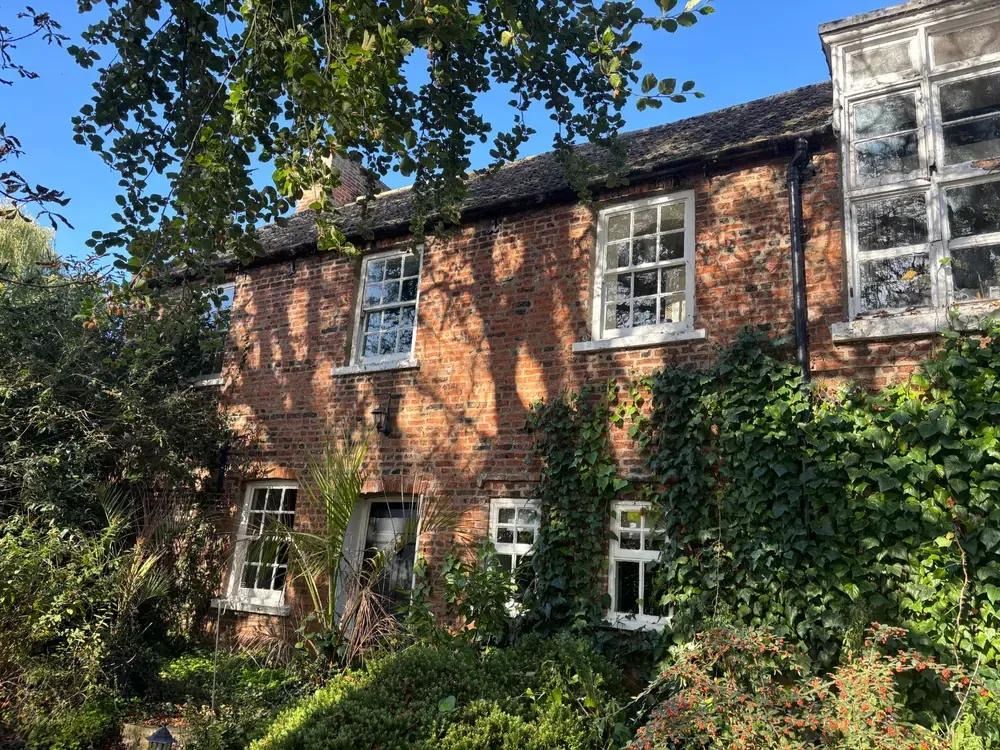
The property's location amongst mature trees creates an attractive setting, but also means its gutters are particularly exposed to falling leaves, moss and other organic material.
Over time, this debris had accumulated within the guttering, restricting the channels designed to carry rainwater away from the roof.
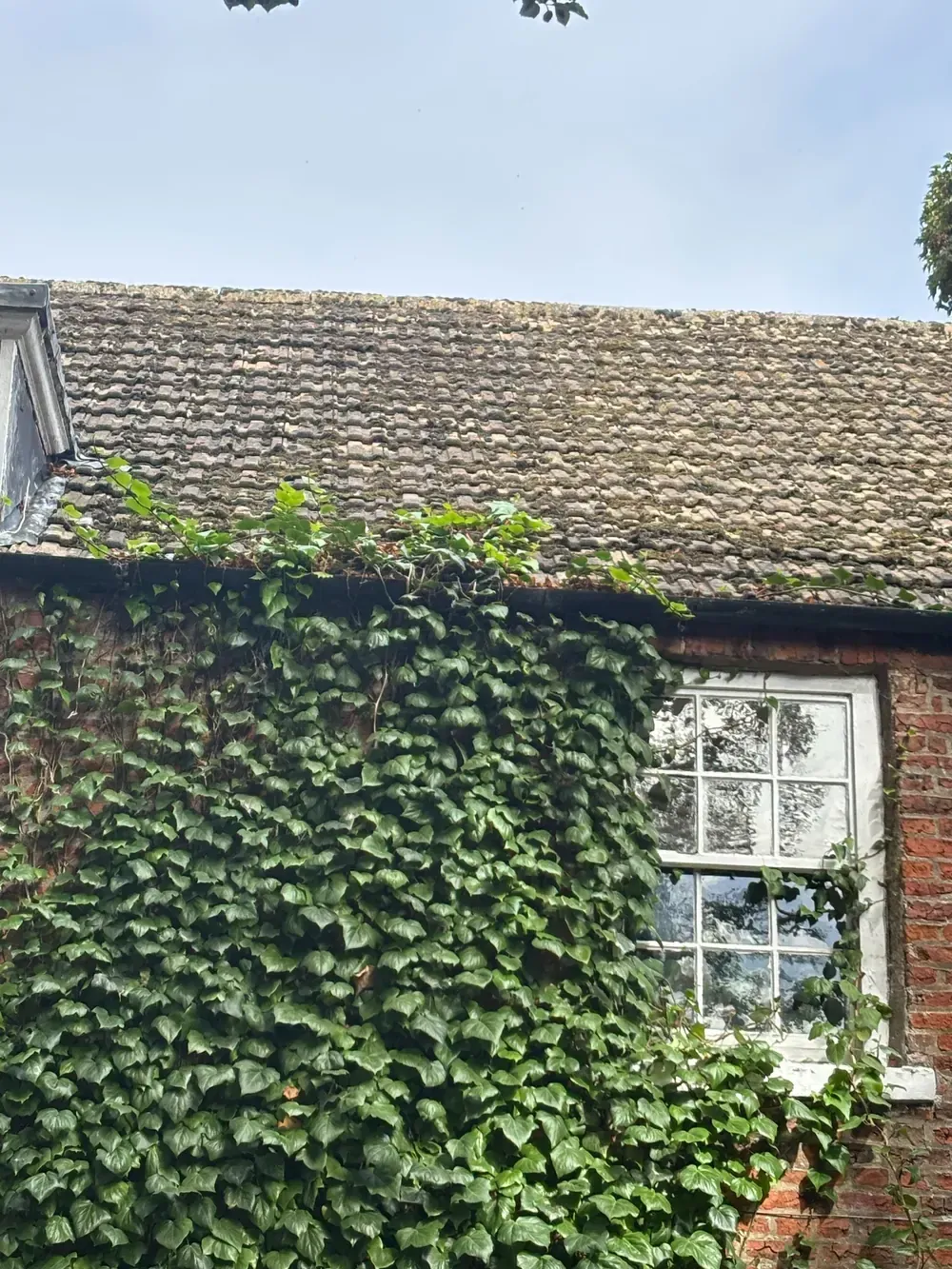
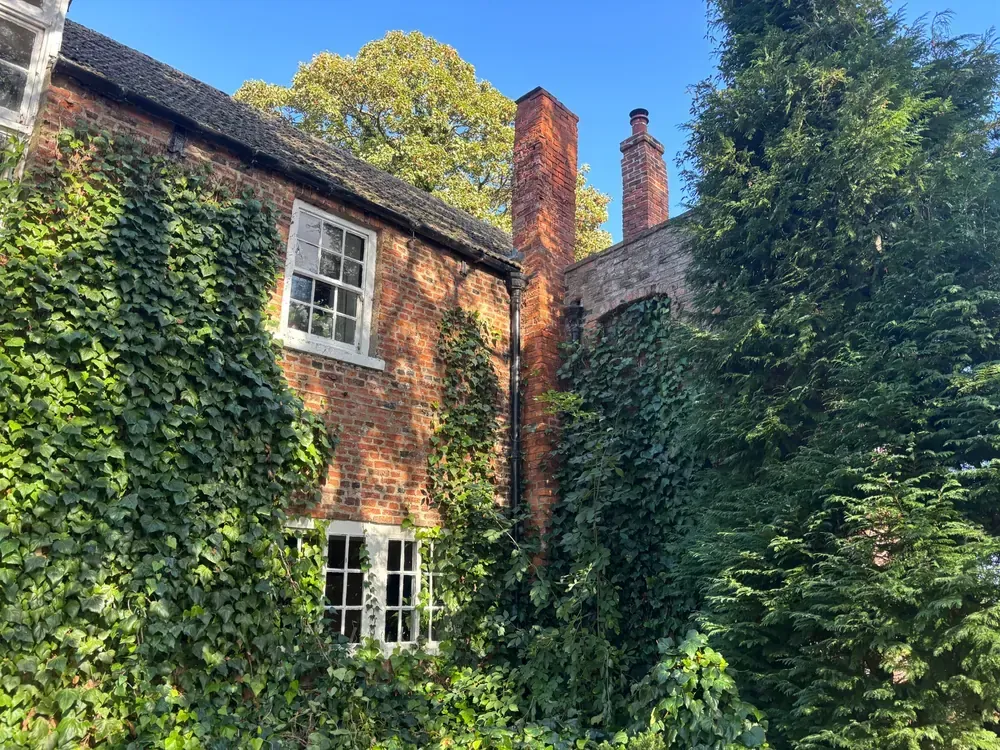
Established ivy had also begun encroaching on sections of the roofline, with vegetation growing over and into the guttering.
The combination of ivy, moss and decomposing leaves made routine drainage increasingly difficult.
During our inspection and clearance work, we also discovered two rainwater downpipes that were completely blocked.
Ground-level drains had accumulated silt and organic debris, creating additional restrictions within the rainwater drainage system.
These issues are particularly important on older properties, where overflowing rainwater can contribute to saturated brickwork, deteriorating mortar joints and unwanted moisture penetration.
A Carefully Planned Three-Person Operation
As Halsham House operates as holiday accommodation, minimising disruption was an important consideration.
We deployed a coordinated three-person team to carry out the work efficiently, with care taken around the building, its grounds and its ongoing use.
Our high-reach gutter vacuum equipment enabled us to access elevated sections of the guttering from ground level where conditions permitted, reducing the need for unnecessary contact with the roofline.
The work involved more than simply removing leaves from the gutters.
Our approach covered vegetation management, gutter clearance, blocked downpipe removal and ground-level drainage maintenance, ensuring that the identified obstructions were addressed throughout the rainwater drainage system.
Managing the Encroaching Ivy
The first challenge was dealing with the ivy that had begun spreading across sections of the guttering.
Rather than removing established vegetation unnecessarily, our team carefully cut back approximately 12 inches (30 cm) of growth around the affected gutter sections.
This created space to access the drainage channels, remove trapped debris and reduce the likelihood of immediate regrowth into the gutters.
Managing vegetation in this way can make future inspections and maintenance considerably easier.
Clearing the Gutters
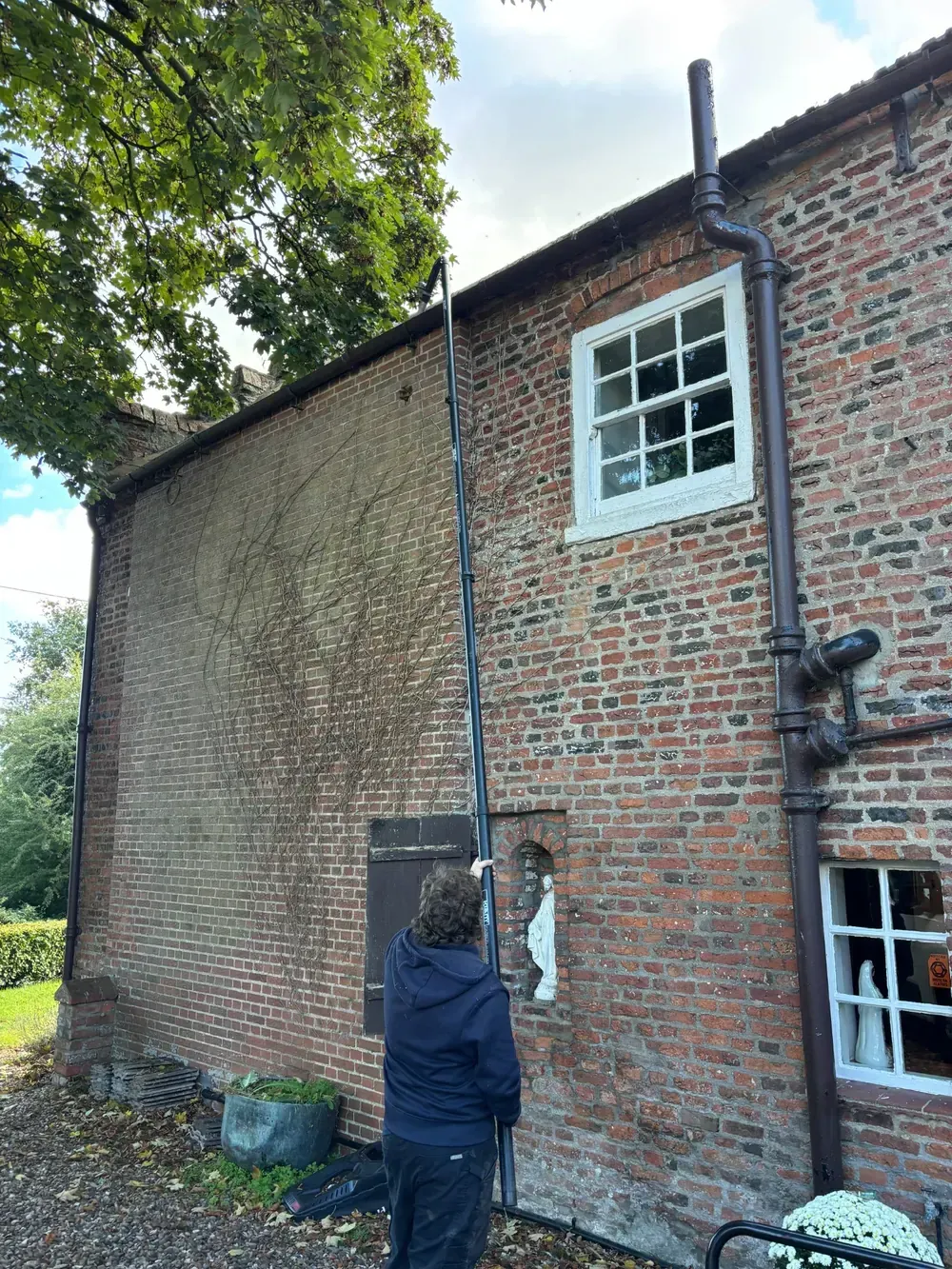
With access improved, our team began removing the accumulated debris using our high-reach gutter vacuum system.
The guttering contained substantial quantities of leaves, moss, silt and decomposing organic material.
In areas surrounded by mature trees, this type of build-up can develop surprisingly quickly, particularly during autumn when leaf fall is at its heaviest.
The material was systematically removed from the affected gutter sections, helping to restore the channels through which rainwater should flow.
Clearing Two Completely Blocked Downpipes
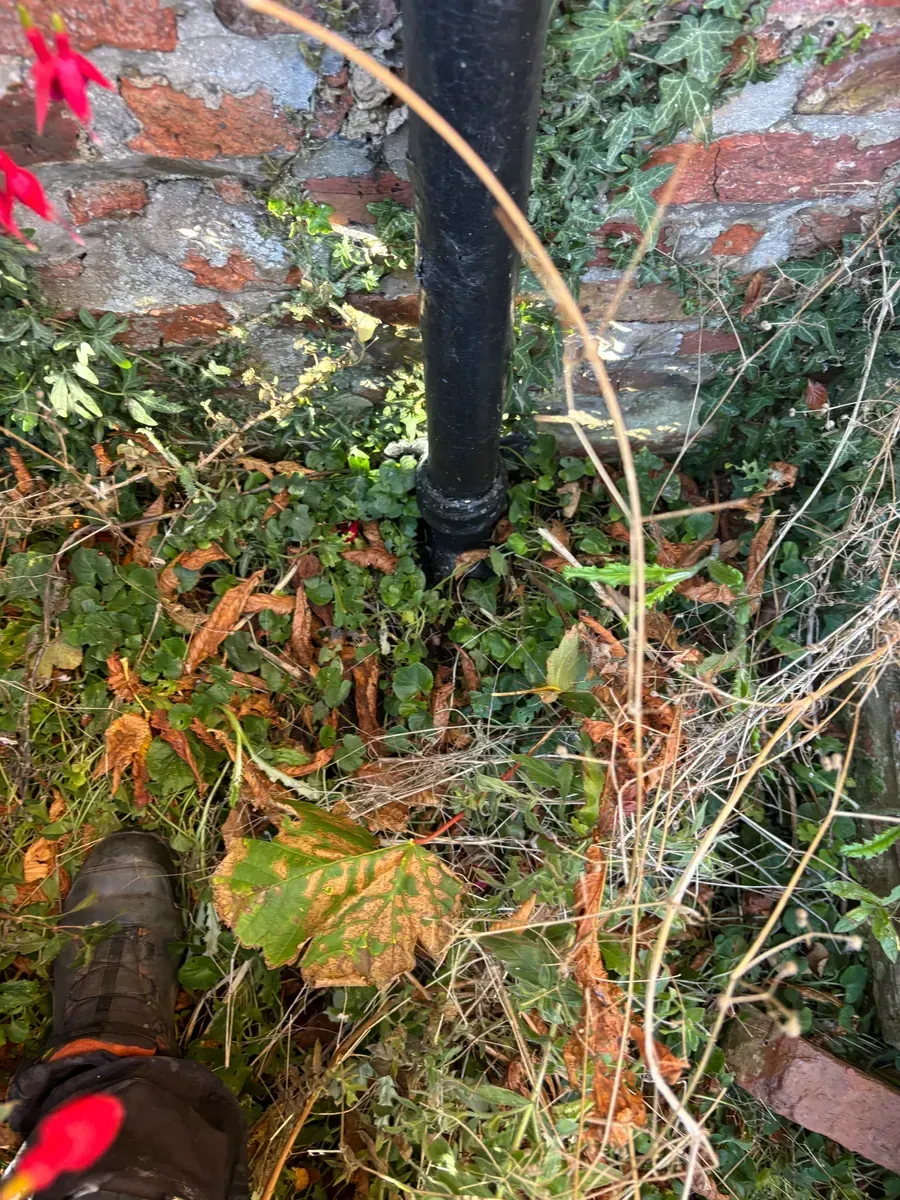
One of the most significant findings during the visit was the discovery of two completely blocked rainwater downpipes.
Although the guttering itself contained considerable debris, clearing the visible material alone would not have resolved these obstructions.
Both downpipes were mechanically rodded to break through and remove the blockages before being thoroughly flushed with water.
This restored the drainage routes and addressed restrictions that could otherwise have continued to cause rainwater to back up.
The ground-level drains were also cleared of accumulated silt, leaves and organic debris.
By addressing the gutters, downpipes and drainage outlets together, we were able to provide a more comprehensive rainwater drainage maintenance service.
Responsible Waste Removal
The scale of the debris accumulation became particularly clear as the work progressed.
In total, we removed five bags of gutter debris, consisting primarily of leaves, moss and decomposing organic material.
Additional waste included the cut-back ivy and material removed from the ground-level drainage system.
All waste generated by our work was collected, removed from the property and responsibly disposed of.
Maintaining clean and tidy working areas was especially important given the property's use as holiday accommodation.
The Result: Clear Gutters and Restored Drainage
By the end of the visit, our team had completed a comprehensive clearance of the property's rainwater drainage system.
The work included:
- Clearing accumulated leaves, moss and organic debris from the guttering.
- Cutting back approximately 12 inches of encroaching ivy around affected sections.
- Mechanically rodding and flushing two completely blocked downpipes.
- Removing accumulated silt and debris from ground-level drains.
- Removing five bags of gutter debris, together with ivy cuttings and additional drainage waste.
- Collecting and responsibly disposing of all waste generated by the work.
The result was cleared guttering, restored drainage routes and improved access for future maintenance.
Importantly, the work was completed by a small, coordinated team with consideration for the building's historic character and its ongoing use as holiday accommodation.
Looking Ahead: Roof Cleaning and Moss Management
Following completion of the gutter clearance, we had the opportunity to discuss the property's wider exterior maintenance requirements with the owner.
As a result, we've been invited to provide a quotation for cleaning the property's concrete-tiled roof.
Given the building's historic character and its location amongst mature trees, our proposed approach focuses on careful moss removal and long-term biological control.
No pressure washing is proposed.
Subject to a suitable assessment of the roof and the building's listed status, our proposed cleaning process would involve three main stages.
1. Pre-Treatment with Biocide
A suitable biocidal treatment would be applied before mechanical cleaning to treat the existing moss and biological growth.
The treatment and appropriate dwell period would be selected according to the product manufacturer's instructions and the roof's condition.
2. Careful Manual Moss Removal
Once the roof is suitable for mechanical cleaning, accumulated moss would be carefully removed using appropriate roof scraping equipment.
The intention is to remove the bulk of the moss without using high-pressure water or unnecessarily disturbing the roof covering.
3. Post-Cleaning Biocide Treatment
Following mechanical moss removal, a further suitable biocide treatment would be applied to help control remaining biological growth and discourage early recolonisation.
The property's shaded, wooded surroundings create favourable conditions for moss and algae, making ongoing monitoring particularly worthwhile.
Rather than relying solely on a one-off cleaning visit, we would look to establish an appropriate inspection and retreatment schedule based on the roof's condition and the rate at which biological growth returns.
This preventative approach would aim to keep the roof in good condition while avoiding unnecessary cleaning interventions.
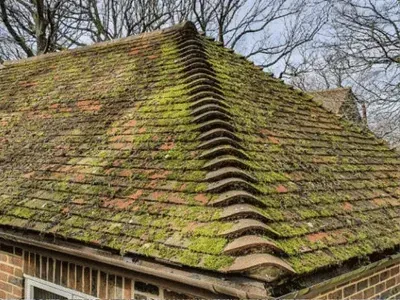
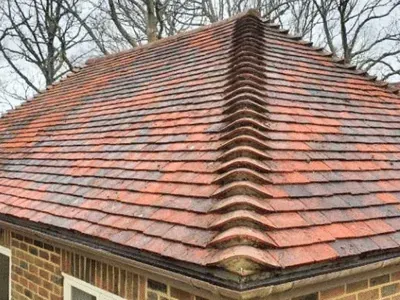
Example of roof moss removal results. These photographs show separate work and are not from Halsham House.
Developing an Annual Exterior Maintenance Programme
Our discussions with the owner also highlighted the benefits of a more coordinated approach to maintaining the property and its grounds.
We've been invited to prepare a proposal for an annual maintenance programme that would bring together routine grounds care and exterior property maintenance.
The proposed programme would include:
- Regular attention to lawns, bushes and shrubs.
- Management of vegetation around the building.
- Routine gutter and rainwater drainage inspections.
- Monitoring of moss and biological growth on the roof.
- General exterior cleaning and preventative property care.
- Recommendations for additional maintenance when required.
For a property such as Halsham House, which combines historic architecture, extensive grounds and holiday accommodation use, planned maintenance offers several advantages.
Regular inspections can help identify developing issues before they become more serious, while coordinated visits can reduce disruption and help maintain a consistently welcoming environment for guests.
The aim would be to develop a practical maintenance schedule suited to the property, its surroundings and the owner's requirements.
Why Preventative Maintenance Matters for Older Properties
The work at Halsham House illustrates why maintaining rainwater drainage systems is about much more than keeping gutters looking tidy.
Blocked gutters and downpipes can cause rainwater to overflow onto external walls, potentially contributing to damp penetration, staining and deterioration of vulnerable building materials.
On historic properties, where traditional construction methods and materials may be present, managing moisture is particularly important.
Properties surrounded by mature trees can also benefit from more frequent inspections, especially following periods of heavy leaf fall or prolonged wet weather.
Keeping vegetation under control, maintaining clear drainage routes and monitoring roof conditions are all practical steps that can help reduce the risk of avoidable deterioration.
Importantly, preventative maintenance does not always mean carrying out extensive work.
Often, it is about identifying the right tasks at the right time and dealing with developing problems before they become more difficult or expensive to resolve.
A Thoughtful Approach to Historic Property Care
Working at Halsham House was a rewarding opportunity for our team and a reminder that every property requires an approach suited to its individual needs.
The combination of centuries-old architecture, mature trees, established ivy and holiday accommodation use made this a particularly interesting project.
While removing five bags of gutter debris was a significant part of the work, clearing the two completely blocked downpipes and associated ground-level drainage was equally important.
Together, these tasks helped restore the property's rainwater drainage and reduce the likelihood of avoidable moisture-related problems.
We're also pleased to have been invited to discuss further roof and grounds maintenance, with the potential to develop a longer-term approach to caring for this historic East Yorkshire property.
Professional Gutter Cleaning and Exterior Maintenance in East Yorkshire
At Hedon Exterior Cleaning, we provide professional gutter clearing, roof moss removal and exterior property maintenance for domestic and commercial customers throughout Hull and East Yorkshire.
From modern family homes to older properties with challenging access, our approach is built around careful working, reliable service and attention to detail.
Whether you need a one-off gutter clearance or would like to discuss a planned exterior maintenance programme, we're always happy to help.
Good work. Fair rates. Done proper.
REQUEST A FREE QUOTE
Need Exterior Cleaning Help?
We offer a full range of exterior cleaning, restoration and maintenance services across Hull & East Yorkshire
Popular Articles
Visit The Knowledge Bank >
Need Help With Your Exterior Cleaning
We offer a wide range of professional exterior cleaning services for homes and properties across Hull & East Yorkshire. From driveways, patios and decking to gutters, render and other exterior surfaces, if something outside your property needs cleaning, restoring or maintaining, there’s a good chance we can help.
Not sure which service you need? Just tell us what you'd like help with and we'll point you in the right direction.