
What is the Best Way to Clean Render?
Render gives a property a clean, modern finish, but unfortunately it can also make algae, red staining and other organic growth particularly noticeable.
White and light-coloured rendered walls can gradually become green, red or patchy as they're exposed to moisture, shade, weather and airborne organic spores.
So, what is the best way to clean render?
There isn't one cleaning method that's right for every property. The best approach depends on the type of render, its condition and what is actually causing the staining.
In this guide, we'll explain why render becomes dirty, whether you should pressure wash it, how professional render cleaning works and what can be done to help keep it looking cleaner afterwards.
Why Does Render Get Dirty?
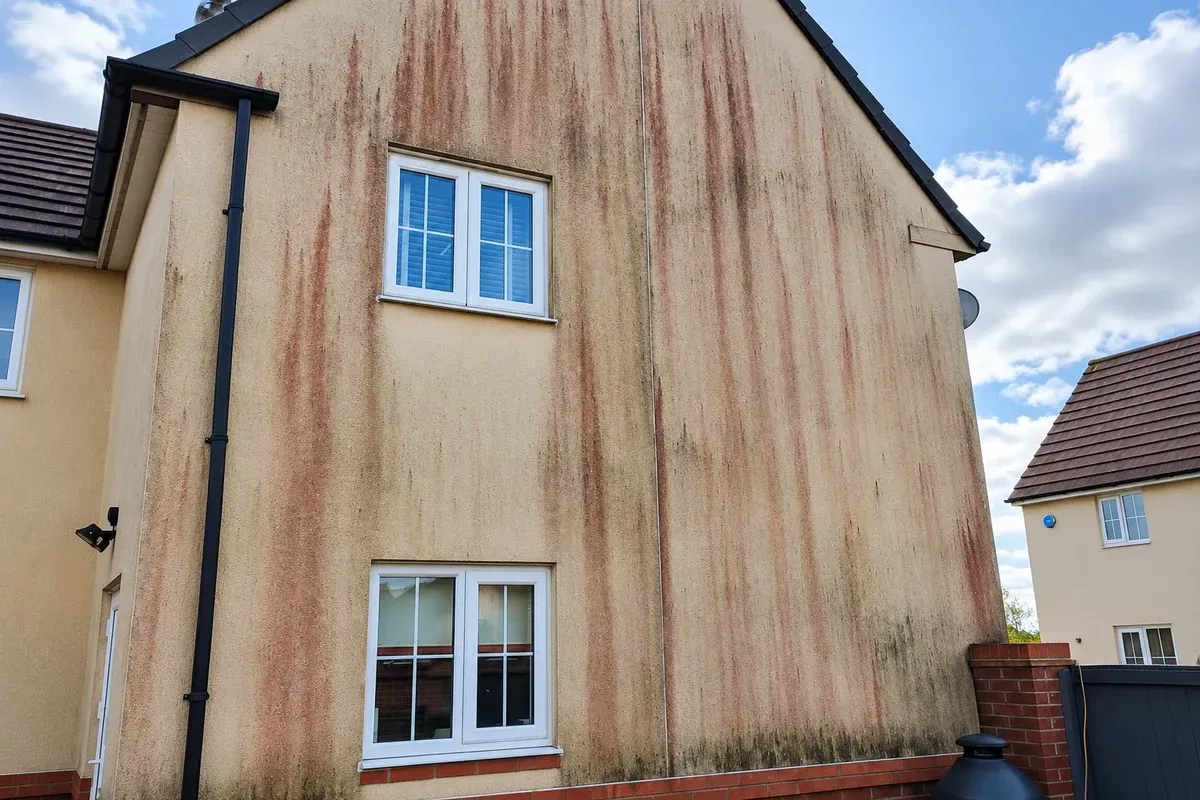
Rendered walls are exposed to the weather throughout the year. Moisture, shade and airborne organic spores can create ideal conditions for biological growth to establish itself across the surface.
This is often most noticeable on north-facing or sheltered elevations, where walls receive less sunlight and remain damp for longer.
Some of the most common problems include:
- Green algae — commonly seen as green films or patches across damp and shaded areas.
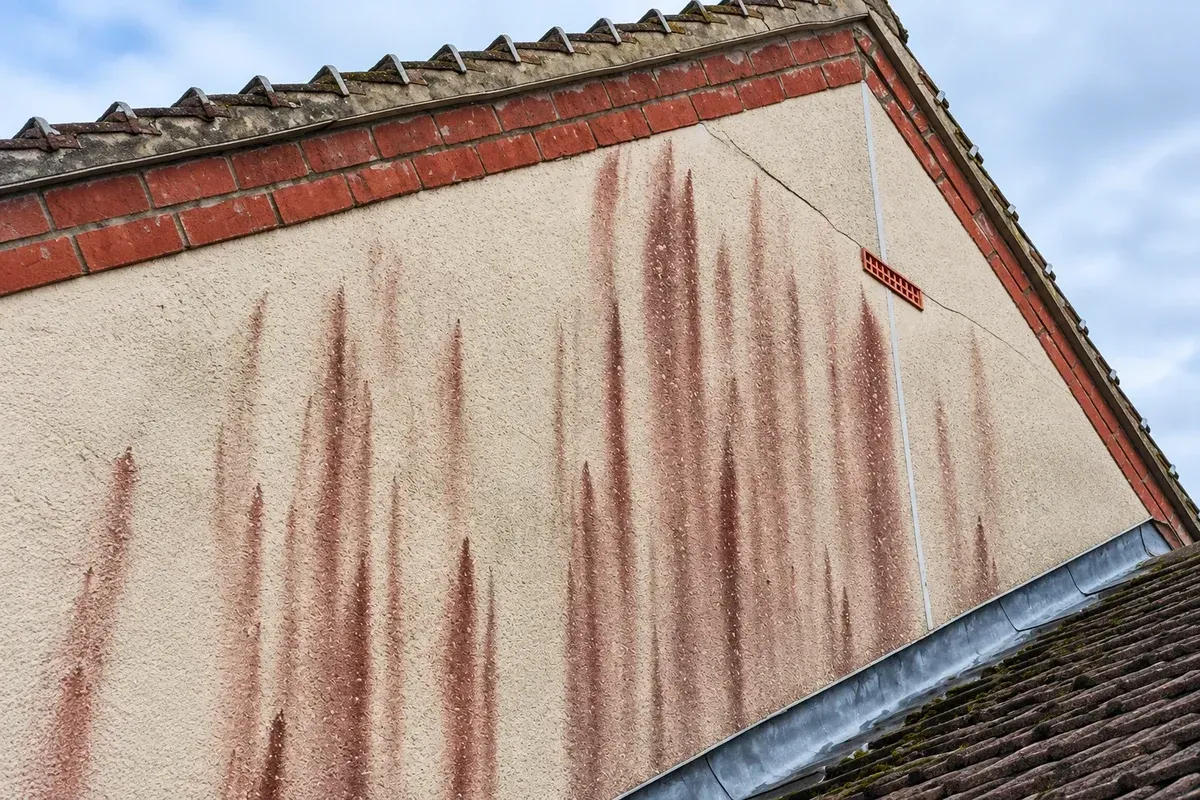
- Red or pink staining — particularly noticeable on white and pale-coloured rendered properties.
- Lichen and other organic growth — more established contamination that can attach itself to textured surfaces.
- General weather staining — rainwater, airborne dirt and environmental contamination can leave render looking streaked, patchy or dull.
If you'd like to understand more about the different types of organic growth found around properties, have a look at our Algae, Moss, Lichen & Black Spot Cleaning Guide.
Can You Pressure Wash Render?
Pressure washing is excellent for many exterior surfaces, but render needs a more considered approach.
Excessive pressure can potentially mark or damage some rendered finishes, particularly where the surface is already cracked, deteriorated or poorly adhered.
There's another issue too. Simply removing visible surface growth doesn't necessarily address the biological contamination responsible for the staining.
That doesn't mean pressure washing equipment can never form part of the cleaning process. The important factors are how it is used, the pressure being applied and whether it's appropriate for that particular surface.
For this reason, the type and condition of the render should be assessed before cleaning begins.
You can read more about how we approach this on our Render Cleaning Hull & East Yorkshire service page.
Is Softwashing the Best Way to Clean Render?
You'll often see softwashing recommended for cleaning rendered walls.
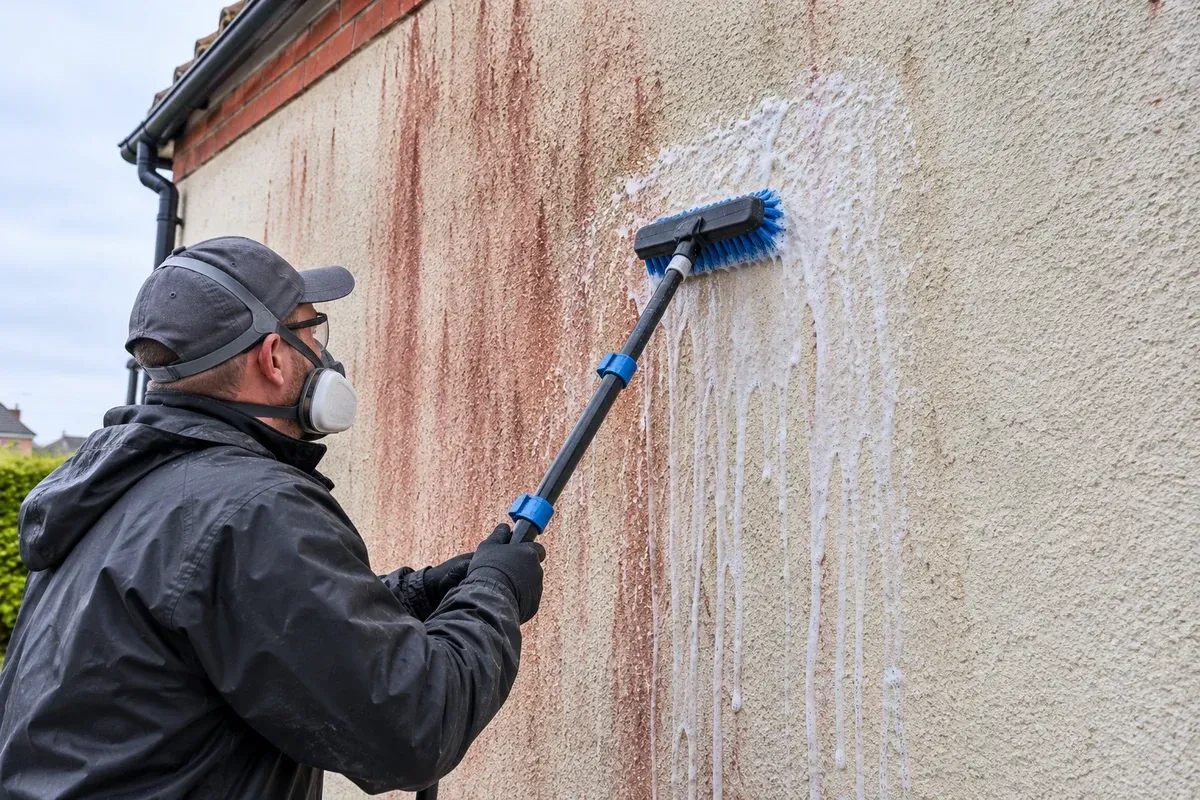
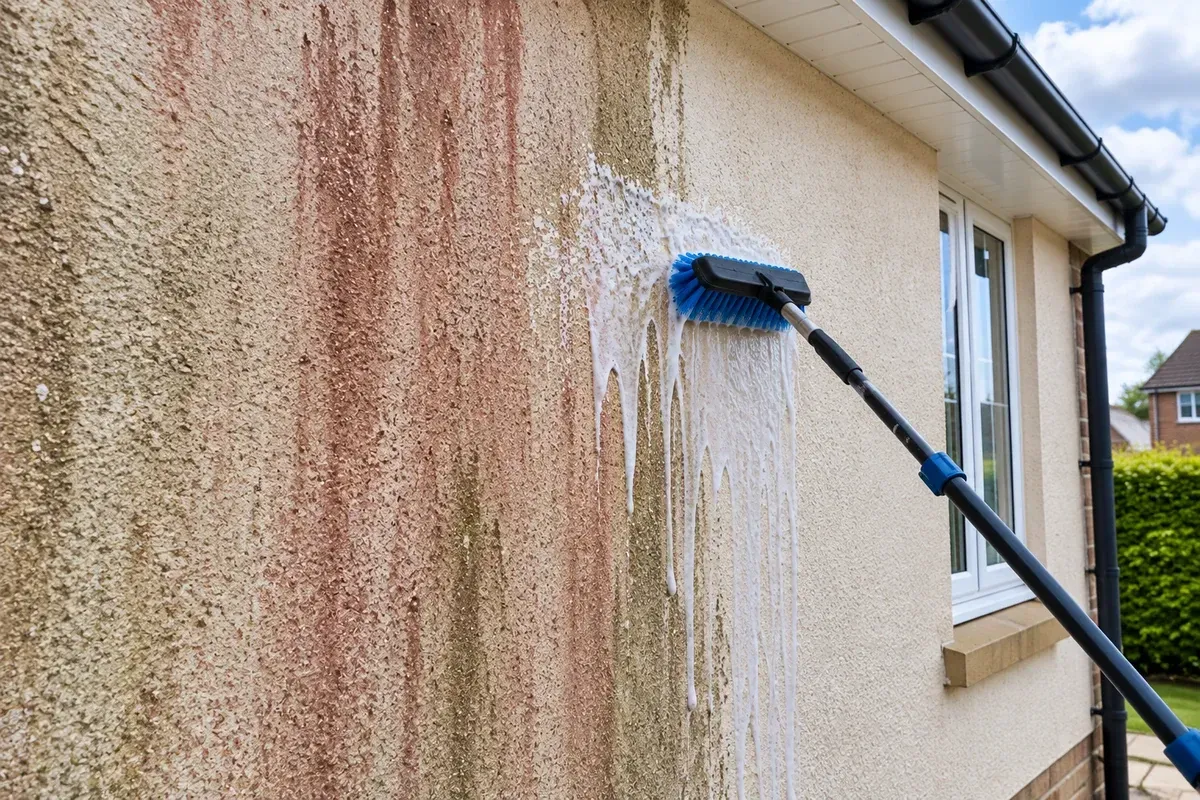
Softwashing generally relies on an appropriate cleaning treatment and relatively low-pressure application or rinsing rather than attempting to remove contamination using aggressive water pressure.
It can be an effective approach for biological staining on many rendered surfaces, but calling something “softwashing” doesn't automatically make it suitable for every property.
The cleaning product, concentration, application method, dwell time and condition of the surface all need to be considered.
“The best cleaning method isn't simply the gentlest or the most powerful. It's the method that's appropriate for the render and the contamination we're trying to remove.”
That's why we prefer to think in terms of surface-appropriate cleaning rather than applying exactly the same process to every rendered wall.
So, What Is the Best Way to Clean Render?
The best place to start is with the render itself.
Before choosing a cleaning method, we look at several things:
- What type of render is it?
- Is the surface sound?
- Is it painted, textured or through-coloured?
- Are there cracks, repairs or areas of deterioration?
- What is causing the staining?
- How severe is the contamination?
- What surrounds the area being cleaned?
Once those questions have been answered, an appropriate treatment and cleaning method can be selected.
Where biological contamination is responsible for the staining, this will often involve applying a suitable cleaning treatment, allowing it sufficient time to work and then gently rinsing or finishing the surface where appropriate.
The important thing is that the cleaning method should be chosen to suit the surface — not the other way around.

Can K Rend Be Cleaned?
Yes. K Rend, silicone render, monocouche and other modern rendered finishes can develop biological staining and can often be professionally cleaned.
However, different render systems can have different textures and finishes, so we don't assume one cleaning process is suitable for all of them.
The condition of the render should be checked before cleaning, particularly for cracking, deterioration, previous repairs or areas where the surface may already be compromised.
Where the render is sound, appropriate cleaning can often make a significant difference to its appearance without aggressive pressure washing or automatically resorting to repainting.
Can I Clean Render Myself?
Small, accessible areas of light contamination may sometimes be manageable by a homeowner, but larger rendered elevations require a little more thought.
Working at height presents an obvious safety risk. Cleaning products may also require suitable PPE, correct dilution, careful application and protection of surrounding plants, windows and other surfaces.
Then there's the render itself.
Using excessive pressure or an unsuitable cleaning product could potentially cause damage that's considerably more expensive to correct than the original staining.
If you're tackling a small area yourself, check the render manufacturer's maintenance guidance and always follow the instructions supplied with the cleaning product.
For widespread staining, difficult access or where you're uncertain about the condition of the render, professional assessment is the sensible option.
How Long Will Render Stay Clean?
There isn't an honest answer that applies to every property.
How quickly biological staining returns depends heavily on the building and its surroundings.
A shaded north-facing elevation underneath trees, for example, can behave very differently from an exposed wall receiving plenty of sunlight.
Factors that can influence regrowth include:
Shade • Moisture • Nearby vegetation • Orientation • Weather exposure • Surface texture
Rather than waiting until the property becomes heavily contaminated again, periodic maintenance treatment can sometimes help manage early regrowth and keep the render looking cleaner for longer.
We prefer to assess each property individually rather than promise that every render clean will last for a fixed number of years.
How We Clean Render at Hedon Exterior Cleaning
When we're asked to clean a rendered property, we don't arrive with one predetermined method and apply it regardless.
We first assess the type and condition of the render and identify the contamination we're dealing with.
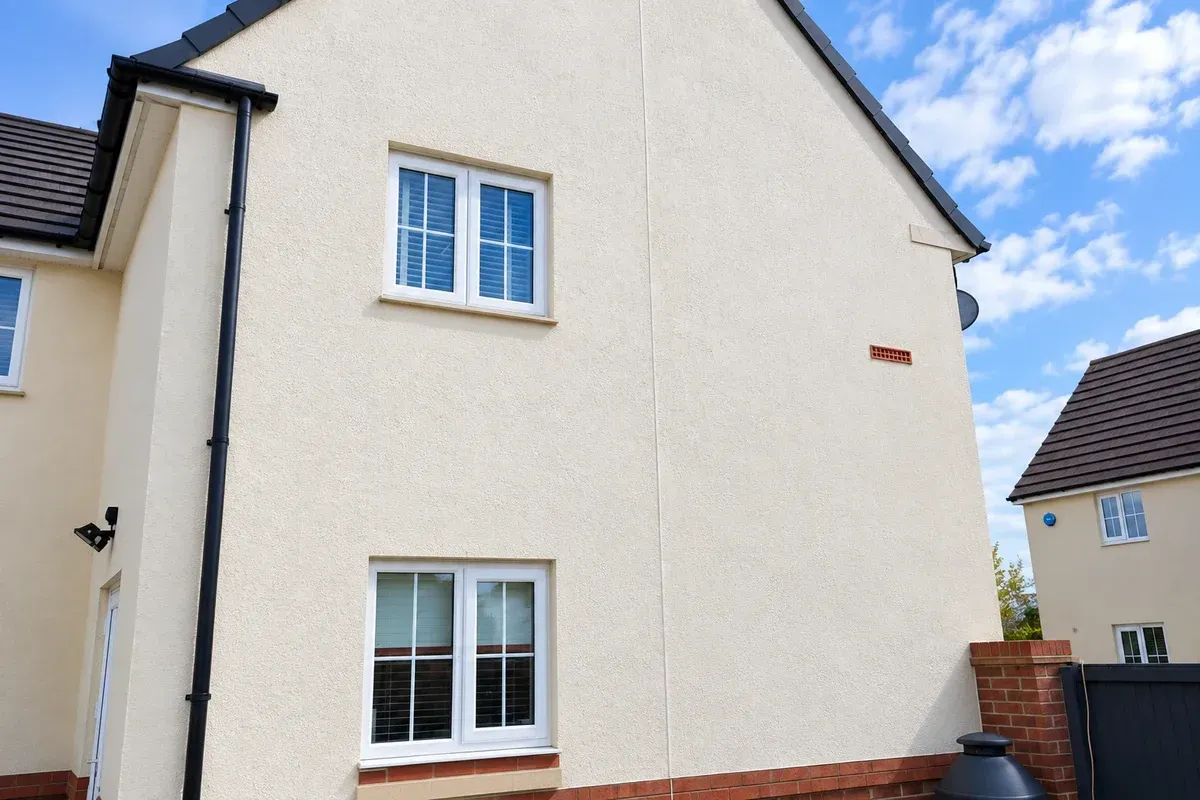
Surrounding areas are considered and protected where necessary before an appropriate cleaning treatment is carefully applied. The treatment is given time to work before the surface is gently rinsed or finished according to the render and the level of contamination present.
Our aim is straightforward: achieve the best practical result while avoiding unnecessarily aggressive cleaning.
For a closer look at the service, including the different render types we clean, our cleaning process and genuine before-and-after results, visit our dedicated
Render Cleaning Service in Hull & East Yorkshire page.
See What Professional Render Cleaning Can Achieve
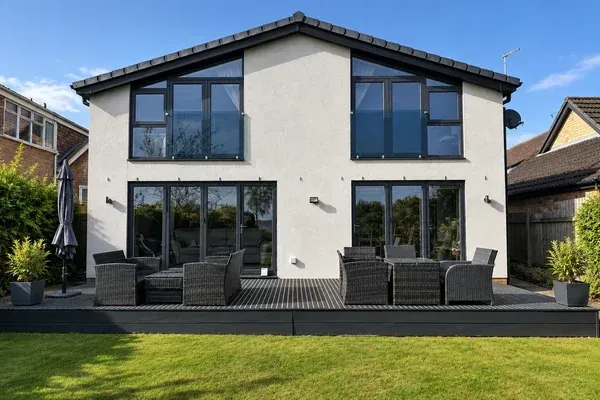
A suitable cleaning treatment can make a significant difference where biological growth and staining have built up across rendered surfaces.
This genuine before-and-after example shows the improvement achieved through professional render cleaning.

Need Help With Stained Render?
If your property is developing green algae, red staining or other organic growth and you're unsure about the best way to deal with it, we're happy to take a look.
Hedon Exterior Cleaning provides professional render cleaning for homes and properties throughout Hull, Hedon and East Yorkshire.
We'll assess the surface, explain what we think is causing the problem and recommend an appropriate approach.

Frequently Asked Questions About Cleaning Render
Can you pressure wash rendered walls?
Pressure washing isn't automatically suitable for every rendered surface. Excessive pressure can potentially mark or damage some finishes, particularly where the render is already cracked or deteriorated. The type and condition of the render should be assessed before deciding how it should be cleaned.
What is the green stuff growing on my render?
Green staining is commonly caused by algae and other organic growth. It tends to develop more readily on walls that remain damp or receive less sunlight, which is why shaded and north-facing elevations can often be affected more heavily.
What causes red or pink staining on render?
Red or pink discolouration can be associated with biological growth that develops on exterior surfaces. It can be particularly noticeable on white, cream and other light-coloured rendered finishes.
Can K Rend be cleaned without repainting it?
Often, yes. If the discolouration is primarily being caused by surface contamination or biological growth, appropriate cleaning can significantly improve the appearance of K Rend without automatically needing to repaint it. The condition of the render should be checked first.
Does softwashing damage render?
Softwashing generally uses cleaning treatments with relatively low-pressure application or rinsing, but that doesn't mean every chemical or process is appropriate for every rendered surface. The treatment, concentration, application method and condition of the render all need to be considered.
How often should render be cleaned?
There isn't a fixed cleaning interval. How quickly staining returns depends on factors including shade, moisture, nearby vegetation, orientation and exposure. Some properties may benefit from occasional maintenance treatment before heavy contamination becomes established again.
Can badly stained render always be restored?
Not necessarily. Cleaning can remove or significantly reduce many forms of organic contamination and surface staining, but it cannot repair damaged render, failed coatings, permanent discolouration or underlying defects. A proper inspection helps establish what improvement is realistically achievable.
Should I clean render myself or use a professional?
Small and easily accessible areas may sometimes be manageable by a homeowner following the render manufacturer's guidance and cleaning-product instructions. Larger elevations, heavy contamination, working at height or uncertainty about the surface are good reasons to consider professional assessment.
Need Help With Organic Growth on Your Property?
If algae, moss, lichen or black spot has become difficult to manage, we can assess the surface and recommend an appropriate cleaning approach.
Based in Hedon, we provide exterior cleaning services throughout Hull and East Yorkshire.
Request a Free Quote
Tell us:
- What you'd like cleaned — driveway, patio, paving, decking or other exterior surface
- Approximate size — measurements are helpful if you have them
- Current condition — let us know about moss, algae, black spots, staining or other problems
- Access — anything we should know about getting equipment to the area
- Your postcode — so we know where the property is
📞 Call us: 01482 898 742
📧 Request a quote online: Complete the form below
🌍 Local service: Hull & East Yorkshire
Get in touch
Our Promise to You
We believe exterior cleaning should be straightforward: turn up when we say we will, do the job properly and charge a fair price.
Need Exterior Cleaning Help?
We offer a full range of exterior cleaning, restoration and maintenance services across Hull & East Yorkshire
Looking for something specific?
Popular Articles


Visit The Knowledge Bank >
Need Help With Your Exterior Cleaning
We offer a wide range of professional exterior cleaning services for homes and properties across Hull & East Yorkshire. From driveways, patios and decking to gutters, render and other exterior surfaces, if something outside your property needs cleaning, restoring or maintaining, there’s a good chance we can help.
Not sure which service you need? Just tell us what you'd like help with and we'll point you in the right direction.